The current Senate terms expire at noon on January 3, 2027. In mid-September, NPR counted 13 senators who are retiring or running for a different office, and two more who will lose their party primaries. The general election on November 3 can add to that number, and an office that loses that night has to prepare to exit with two months left
Senate rules set the end date for official accounts
Under section 4.6 of the Senate’s Internet Services and Technology Resources Usage Rules, a member’s official social media accounts cannot be supported by Senate resources beyond the last day of the term. They are deactivated or converted, and a converted account can no longer be identified as official. In both cases, the account as constituents saw it during the term exists afterward only where someone captured it.
Preserving the record is left to the office
Records in a senator’s office are, by custom, the senator’s personal property. A CRS report updated in December 2025 notes that members are not required to preserve them.
The National Archives captures congressional websites through its Congressional Web Harvest, once per Congress, in the closing weeks. Across a six-year term that comes to three captures. A press release revised between them, or a post removed before one, falls outside that record.
A scheduled archive covers an office whether it stays or closes
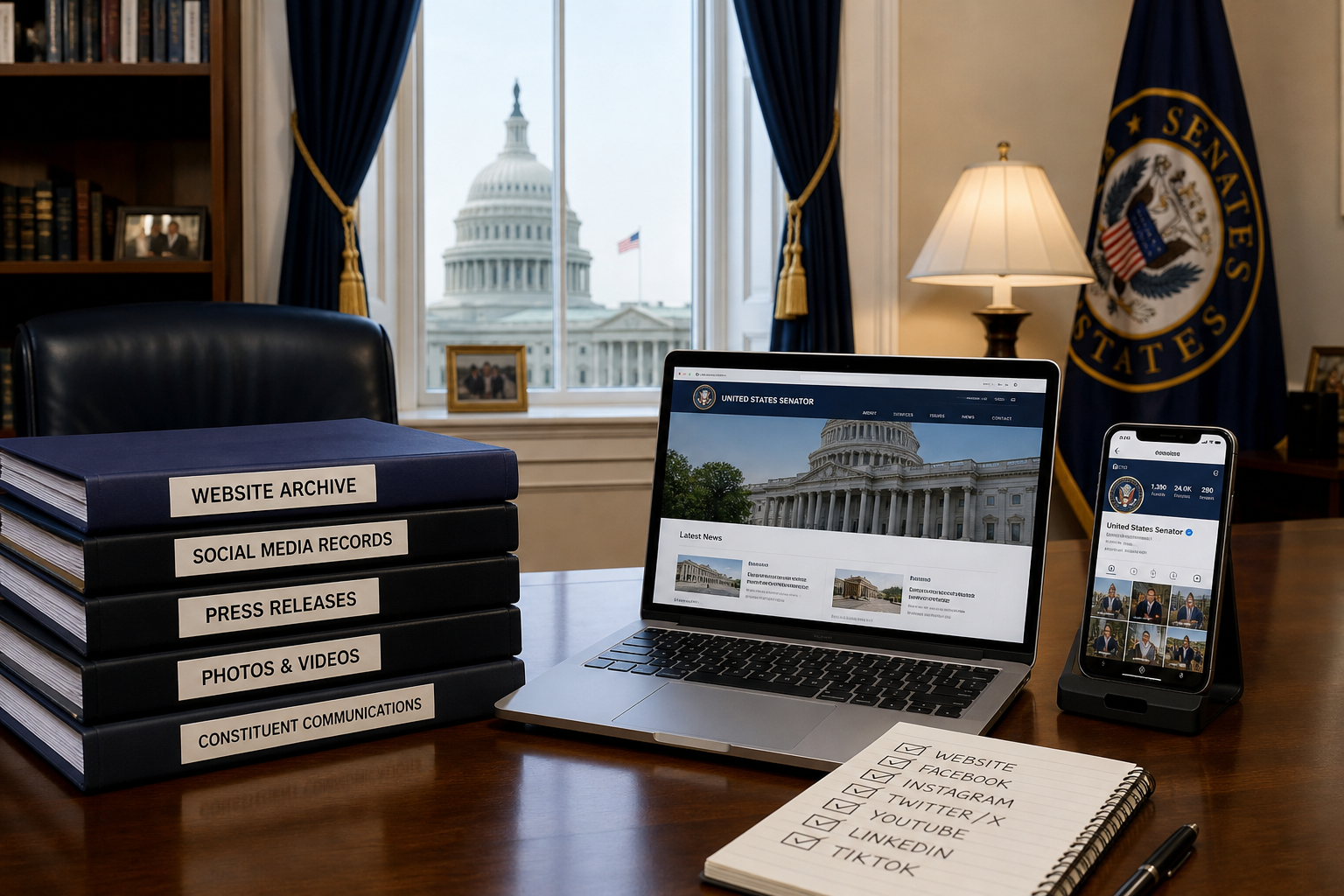
An office that knows it is closing can plan the capture now: the senate.gov site and every official account, with a final pass after the last official post and before the accounts are deactivated or converted.
An office on the ballot learns the outcome on election night at the earliest. If it already archives on a schedule, the record runs through the most recent capture, and closing adds one more scheduled run. An office without an archive has to set one up and run it inside the same two months as the rest of the closing.
Set up your office’s archive now to meet your deadline of January 3
Chronicle archives websites and social media on a schedule. Social Media may include Facebook, Instagram, LinkedIn, YouTube, TikTok and more. It preserves each capture in WARC format with a SHA-256 hash and a timestamp, and captured pages replay with their original dropdowns and forms, links, comments on social and much more.
An office that knows its closing date can scope a one-time capture now. An office on the ballot can start scheduled archiving and have the record in place whichever way November goes.




 N/a
N/a