One of the biggest mistakes in eDiscovery is collecting more data than you need before beginning document review. Many organizations continue collecting information because they fear missing evidence, but endless collection delays case strategy, increases costs, and creates larger review sets than necessary.
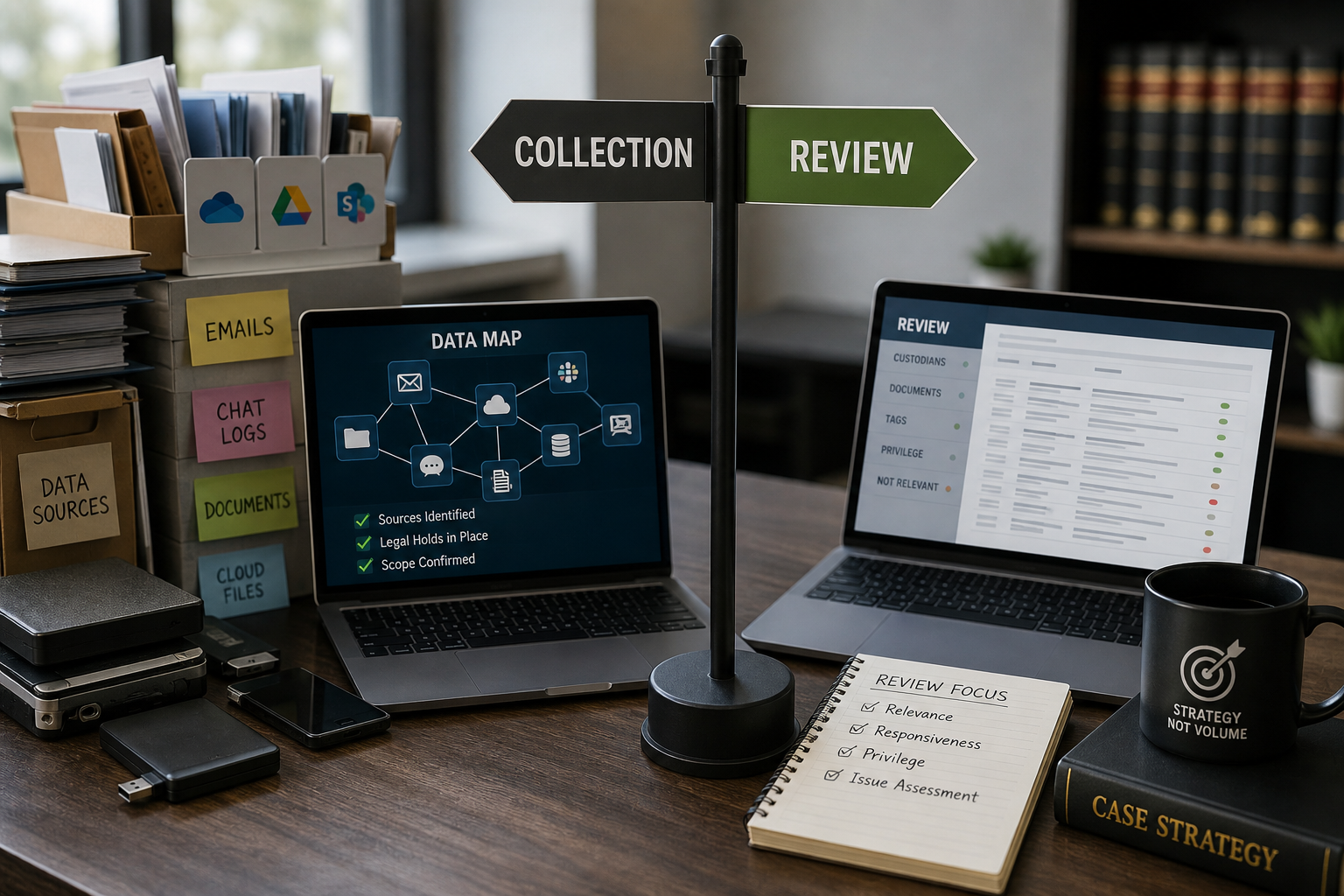
Knowing when to shift from collection to review in eDiscovery helps your legal team work more efficiently. Once you have preserved the right information and completed the collection process, your focus should move to understanding the data in front of you. You can simplify both stages of the eDiscovery process by relying on useful tools such as Hanzo Illuminate.
The Difference Between Collection and Review
Collection and review serve different purposes in the eDiscovery process, but some organizations struggle to decide when it is time to switch from one phase to another.
Collection involves identifying, preserving, and gathering potentially relevant electronically stored information from the systems that may contain evidence. The objective is to secure the information without changing its content or metadata.
Review begins after collection. During this phase, legal teams analyze documents and communications to determine their relevance, responsiveness, privilege, and importance to the case. This is where evidence is organized into a legal strategy.
Moving to review too early can leave important evidence behind, but waiting too long can significantly increase costs without improving your outcome.
Signs That Collection Is Complete
There is rarely a perfect point where every possible source has been exhausted. However, there are some signs that the data collection portion of eDiscovery is complete and that it is time to transition to review.
Relevant Data Sources Have Been Identified
Your team should know where potentially relevant information exists. This includes email, collaboration platforms, cloud storage, project management applications, shared drives, websites, and any other business systems connected to the matter. When your data map reflects the organization’s communication environment, you are less likely to discover major new sources later.
Legal Holds Are in Place
Before review begins, you should confirm that all relevant data remains protected. Legal holds should cover the appropriate custodians, systems, and communication platforms so information is not lost while review is underway. Once you are confident these holds are in place, you can start focusing on the review process.
Collection Matches the Scope of the Matter
The collected data should align with the claims, defenses, relevant time period, and key custodians identified during Early Case Assessment. If your team continues expanding beyond that scope without a clear reason, review costs are only going to go up.
Why Does Endless Collection Create Problems?
During the eDiscovery process, some organizations hesitate to move into review because they believe more data always produces better results, but the reality is that excessive collection usually means unnecessary work.
Every additional gigabyte used will only increase your costs as your review teams spend more time filtering irrelevant information before finding useful evidence. It is important to know when to focus on reviewing the data you have already collected.
Learn How Hanzo Illuminate Supports a Smarter Shift From Collection to Review in eDiscovery
Modern eDiscovery requires a thoughtful balance between collecting and reviewing your data. Hanzo Illuminate helps legal teams understand where all the relevant information exists before large-scale collection starts by creating a comprehensive data map across all of your systems.
Instead of treating each communication platform as a separate silo, Illuminate connects these sources into a unified view. This allows legal teams to identify the most relevant data before review starts, reducing unnecessary collection and limiting review volume.
Illuminate also preserves relationships between chats, linked documents, and collaborative content so reviewers can understand communications in context. Rather than reviewing isolated messages, legal teams see how conversations connect to shared files and ongoing projects. To understand when to shift from collection to review in eDiscovery and explore how Illuminate can help your organization, reach out to a Hanzo representative today.




 N/a
N/a